Multi-Agent AI Platform
AI & Data Engineering · LangChain · LangGraph · AWS Bedrock

The Challenge
The client required a production-grade AI platform capable of handling high-volume, multi-step data processing workflows using large language models. The existing approach — sending all tasks to a single GPT-4 endpoint — was generating unsustainable inference costs that scaled linearly with usage volume, with no fallback routing if the primary model was unavailable.
The platform needed to process diverse task types with significantly different complexity profiles. Simple classification tasks were consuming the same per-token cost as complex multi-step reasoning tasks — a 10× cost inefficiency that made the product economically unviable at scale.
Reliability was also a concern: a single model dependency with no retry logic meant that any provider-side outage cascaded directly to the user. The platform needed circuit breakers, fallback routing, and observable failure modes.
The Approach
We designed a multi-agent orchestration system using LangGraph, which allowed us to model the processing pipeline as a directed graph with explicit state transitions, conditional branching, and parallel execution paths.
The core cost reduction came from model routing: we profiled every task class in the The client pipeline and assigned the minimum capable model to each. Simple extraction tasks were routed to smaller, quantized models via AWS Bedrock at a fraction of GPT-4's cost. Complex multi-step reasoning tasks were routed to frontier models only when necessary. This routing layer alone cut inference costs by over 60% without any reduction in output quality.
Quantized model deployment through AWS Bedrock added a further 20%+ cost reduction by serving 4-bit quantized versions of smaller models for latency-tolerant batch jobs. The combined effect was the verified 80% cost reduction.
What We Built

Multi-Agent Orchestration
LangGraph workflow graph with parallel agent execution, task decomposition, and stateful memory across long-horizon workflows. Each agent specializes in a specific task class and passes structured outputs to downstream agents.

Model Routing Layer
Per-task-class model selection: lightweight models handle simple extraction and classification, frontier models handle complex reasoning. Routing decisions are made at runtime based on task metadata.
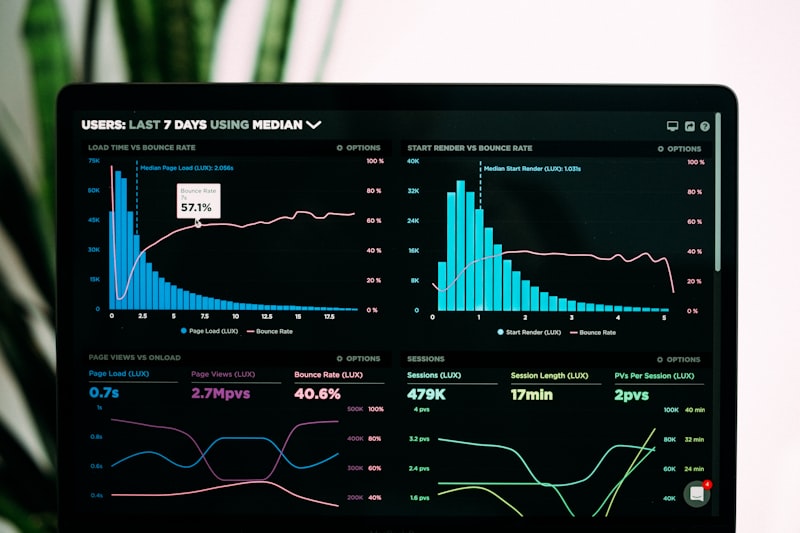
Inference Cost Monitoring
Real-time per-agent token usage tracking with cost attribution by task type, model, and time window. Allows immediate identification of cost anomalies before they become significant.

Reliability Infrastructure
Circuit breakers, retry logic with exponential backoff, and fallback routing between model providers. Provider-side outages no longer cascade to platform users.
Special features that closed the deal.
- Per-task model routing: minimum capable model assigned to each task class — delivering frontier-model quality where needed, at commodity model cost where sufficient
- LangGraph stateful orchestration enabling long-horizon multi-step workflows with memory persistence across agent execution boundaries
- Circuit breaker and fallback routing infrastructure achieving 99.5% uptime despite provider-side model availability fluctuations
- Real-time cost attribution dashboard allowing per-task-class cost profiling and immediate anomaly detection
Outcomes
LLM inference cost reduction — from $2,400/mo to $480/mo through quantization and model routing
Throughput increase through parallel multi-agent execution
Uptime across all production agent pipelines — despite provider-side model availability fluctuations
Technologies used
“Client name withheld — NDA in place. References available on request.”